Cardiovascular risk in Indian women: What the research reveals
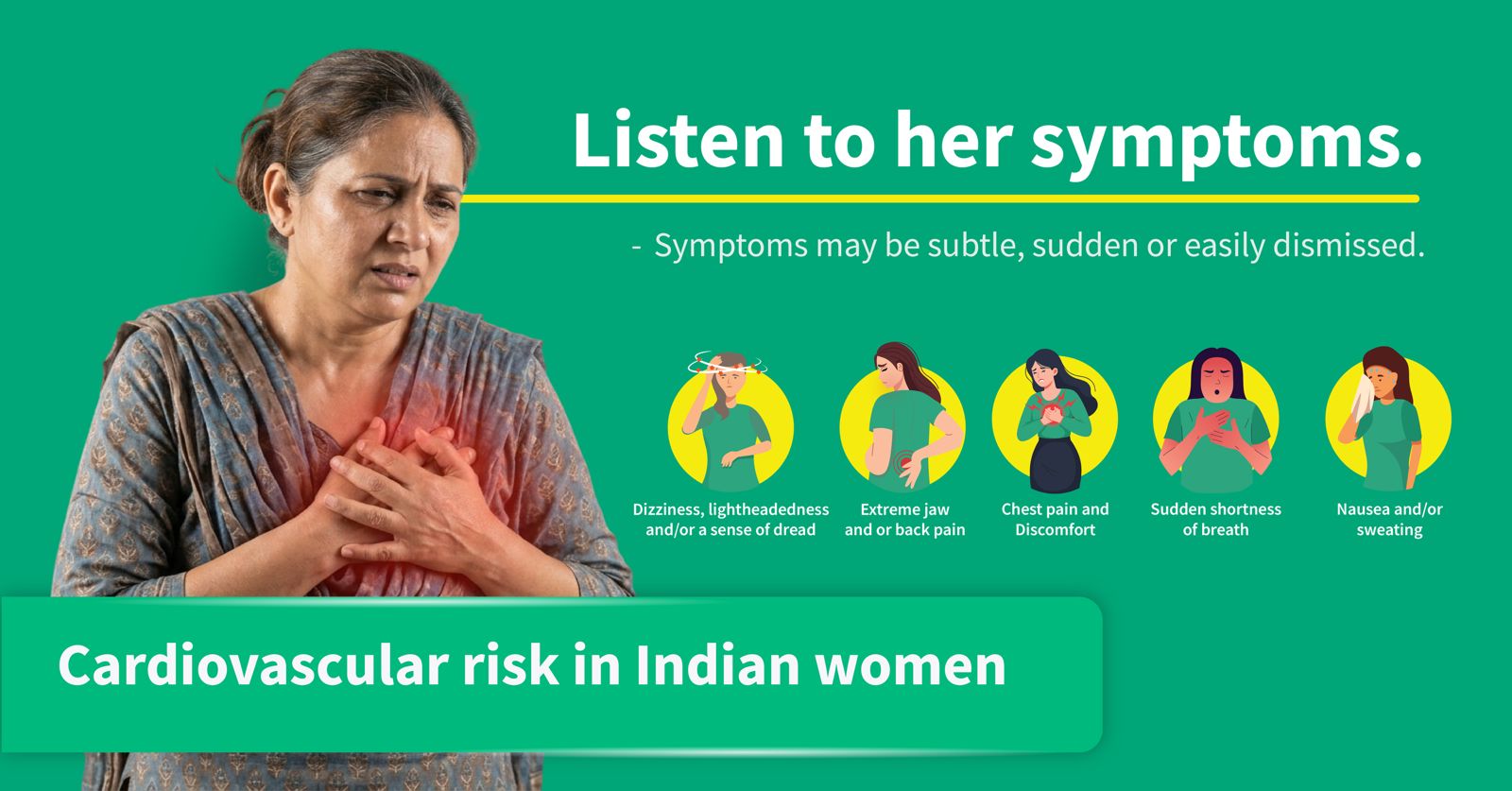
Cardiovascular risk in Indian women needs to be understood through population-specific research rather than general heart health advice. Three Indian studies offer complementary perspectives: cardiovascular risk factors among women aged 15 to 49, cardiovascular disease among adults aged 45 and above, and cardiovascular risk factor knowledge among low income women in Mysore. Together, they examine measured risk factors, diagnosed disease and awareness. These outcomes must be interpreted separately because the studies cover different populations and use different methods.
Cardiovascular risk in Indian women: Nationwide survey findings
Central obesity, blood pressure and glucose abnormalities
A 2024 study published in BMC Women’s Health analysed data from 724,115 women aged 15 to 49 across 707 districts in India using the fifth National Family Health Survey (NFHS 5).
The researchers reported central obesity in 78.2% of participants, based on a waist-to-hip ratio above 0.8. By comparison, 23.9% of women were classified as overweight or obese using a body mass index (BMI) above 25. These estimates reflect different anthropometric measures and definitions. The study did not establish which measure better predicts future cardiovascular events.
The researchers also identified raised blood pressure in 11.8% of women and raised blood glucose in 8.6%. The study defined raised blood pressure as a reading of at least 140/90 mmHg or current antihypertensive treatment. Raised blood glucose was defined as random blood glucose above 140 mg/dL or current glucose-lowering treatment. These are survey indicators and should not automatically be interpreted as confirmed clinical diagnoses.
Why age and geography change the interpretation
The study found that the adjusted odds of raised blood pressure and blood glucose increased with age. It also documented substantial geographical variation. For example, reported tobacco use ranged from 0% in Chandigarh to 48% in Mizoram.
These differences illustrate why cardiovascular risk in Indian women must be understood within regional contexts, as national averages can conceal important local patterns. The findings can inform population-level prevention and public health planning, but the study’s cross-sectional design cannot establish causation or determine how many participants subsequently developed cardiovascular disease.
Cardiovascular disease among Indian adults aged 45 and above
What the LASI findings show about women and men
An analysis of 56,935 adults aged 45 and above using data from the Longitudinal Ageing Study in India (LASI) reported cardiovascular disease prevalence of 4.6% among women and 5.9% among men. In contrast, hypertension prevalence was higher among women, at 48.9%, compared with 44.0% among men. These findings highlight the distinction between reported cardiovascular disease and a common cardiovascular risk factor. The study examined self-reported diagnoses, so its estimates may not capture all undiagnosed cases. The original study by Kodali et al. provides further details.
What the associations mean for clinicians
Among women, hypertension was associated with 2.60 times the adjusted odds of cardiovascular disease, diabetes with 2.53 times the odds, and hypercholesterolaemia with 1.70 times the odds. These associations highlight the importance of assessing multiple cardiovascular risk factors in clinical practice. However, the study’s cross-sectional design cannot establish causation or determine whether these associations are statistically stronger in women than in men.
Cardiovascular risk awareness among low-income women in Mysore
What the study reveals about risk factor knowledge
A study of 607 women aged 40 to 64 living in urban slum communities in Mysore assessed their knowledge of cardiovascular risk factors. Approximately 47% answered fewer than half of the knowledge questions correctly. Only four of the seven traditional cardiovascular risk factors assessed were recognised by more than half of the participants. These findings suggest that awareness of established risk factors was limited in this study population. The results should be interpreted in the context of the study’s specific setting and sample rather than generalised to all women in India. The original research by Krupp et al. provides further details.
Implications for patient communication
For clinicians, communicating cardiovascular risk in Indian women involves assessing patients’ understanding of established risk factors rather than assuming they recognise them. Clear, accessible discussions about blood pressure, diabetes, cholesterol and other relevant risk factors may help patients better understand their health risks. Since knowledge alone does not establish whether a person adopts preventive behaviours, clinicians should assess both understanding and individual barriers to prevention during consultations.
What these findings mean for cardiovascular prevention in India
The three studies highlight distinct considerations for cardiovascular prevention in India. First, the NFHS-5 findings demonstrate variation in measured risk factors by age and geography, reinforcing the importance of interpreting population-level data within local contexts. These estimates can inform public health planning but cannot determine an individual patient’s cardiovascular risk.
Second, the LASI findings distinguish diagnosed cardiovascular disease from associated risk factors. The prevalence of hypertension should not be interpreted as equivalent to the prevalence of cardiovascular disease, as the two represent different health outcomes.
Third, the Mysore study highlights the need to assess cardiovascular risk knowledge within the population being served. Healthcare professionals should avoid assuming that awareness is uniform across socioeconomic and educational groups. Together, these findings offer useful insights for prevention planning and patient communication, although they do not independently establish which clinical interventions or screening schedules are most effective.
Research gaps and the way forward
Further research on cardiovascular risk in Indian women could connect measured risk factors, patient knowledge, health behaviours and subsequent cardiovascular events. The Mysore study focused on a nonprobability sample from one city, the NFHS-5 analysis examined risk factors among women aged 15-49, and the LASI analysis relied on reported cardiovascular diagnoses among adults aged 45 and above. Longitudinal research combining clinical measurements, patient awareness, health behaviours and follow-up outcomes could help clarify how these factors relate to cardiovascular disease development over time.
Conclusion: Applying Indian cardiovascular research to practice
Indian research offers healthcare professionals valuable insights into cardiovascular risk factors, diagnosed disease prevalence and patient awareness. Interpreting findings according to each study’s population, methods, and limitations is essential for evidence-informed prevention and patient communication.
Explore CMEPEDIA’s educational resources to support continued learning and evidence-informed clinical practice.


