Healthcare education growth in India: What comes next?
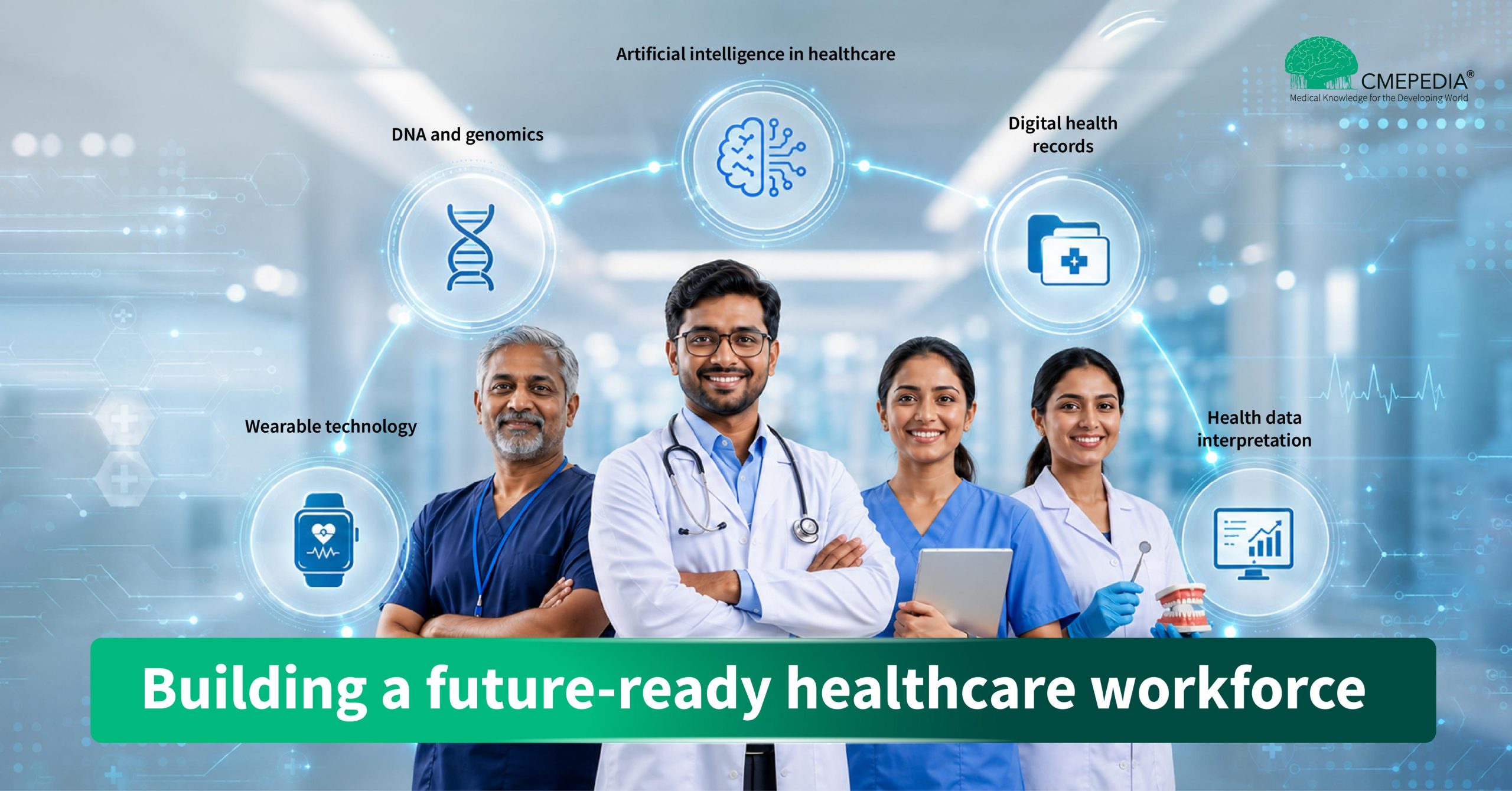
Healthcare education growth in India has accelerated significantly over the past decade, creating a stronger foundation for developing the country’s healthcare workforce. According to the Ministry of Health and Family Welfare, the number of medical colleges increased from 387 in 2014 to 818 in 2025. During the same period, undergraduate medical seats rose from 51,348 to 1,28,875, while postgraduate seats increased from 31,185 to 82,059.
Nursing capacity also plays an essential role in this progress. As of 31 March 2025, India had 42.94 lakh registered nursing personnel and 5,253 nursing institutions producing nearly 3.87 lakh nurses annually. This expansion can strengthen healthcare delivery by creating more opportunities for professional education and workforce development. The next consideration is how education can prepare healthcare professionals with the knowledge, judgement, and digital capabilities required for a changing healthcare environment.
Healthcare education growth in India: Why capacity alone does not equal readiness
Educational capacity and professional capability are closely connected, but they are not the same. Capacity includes colleges, training seats, faculty, learning facilities, and opportunities to enter healthcare professions. Capability reflects whether professionals can evaluate emerging evidence, interpret health data, use digital systems responsibly, and apply new knowledge safely in patient care.
Expanding education infrastructure remains essential for strengthening India’s healthcare workforce. However, infrastructure delivers its greatest value when graduates and practising professionals are equipped for changing clinical environments. Building capability is therefore not an alternative to increasing capacity. It is the next stage of development, supported by relevant curricula, prepared educators, effective training, and responsible engagement with healthcare technologies.
The changing shape of healthcare knowledge
Healthcare knowledge is expanding beyond traditional clinical information. Professionals increasingly encounter algorithm-generated recommendations, genomic research, digital records, remote consultations, and patient-generated health data. Understanding how to evaluate these developments is becoming an important part of safe and informed practice.
Artificial intelligence in healthcare practice
Artificial intelligence is being applied across areas such as disease screening, medical imaging, structured data capture, clinical decision support, and documentation. In India, the SAHI and BODH initiatives provide frameworks to encourage safer, more transparent, and more accountable health AI development and evaluation.
Some applications are already being used in healthcare settings. According to the Ministry of Health and Family Welfare, the Cough Against TB solution was used to screen more than 1,60,000 people for pulmonary tuberculosis, increasing case detection by 12 to 16%. MadhuNetrAI, launched by AIIMS in December 2025, enables health workers without specialist training to screen retinal images for signs of diabetic retinopathy. These examples show how AI may support earlier screening and extend access to services where specialists are limited. Read more about current AI applications in Indian healthcare.
However, an AI-generated recommendation is not a final clinical decision. Healthcare professionals must consider data quality, patient circumstances, medical evidence, and potential bias before acting on an output. The World Health Organization’s guidance on health AI also emphasises autonomy, safety, transparency, accountability, inclusiveness, and sustainability.
Genomics and precision medicine
Genomics examines an individual’s or population’s genetic information and how it may relate to health and disease. The GenomeIndia Project has created a research resource representing India’s genetic diversity. It is strengthening the research foundation for future developments in population genomics and precision medicine.
As genomic research progresses, healthcare professionals may need foundational knowledge to interpret information carefully, explain its limitations, protect privacy, and communicate its possible implications without overstating clinical certainty.
Digital health, health data, and wearables
The Ayushman Bharat Digital Mission is developing infrastructure intended to support connected digital health services and the appropriate exchange of health information. Initiatives such as eSanjeevani also demonstrate how teleconsultation has become part of India’s healthcare environment.
Wearable technologies add another potential source of patient-generated information, including activity, heart rate, or sleep data. This information may contribute useful context, but its quality, clinical relevance, and limitations require professional evaluation. Consumer devices should not be treated as independent diagnostic tools or substitutes for clinical assessment.
Building institutional and professional readiness
Preparing a future-ready workforce requires more than introducing new technologies into classrooms or clinical settings. Institutions must ensure that professionals understand how these tools work, where they may add value, and where their limitations create risks. Curricula should evolve alongside healthcare knowledge while maintaining a strong foundation in evidence, ethics, patient safety, privacy, and professional accountability.
Faculty development is equally important. Educators need sufficient confidence to explain emerging technologies, challenge unsupported claims, and guide learners through realistic clinical scenarios. Case-based and interprofessional learning can help professionals examine the same technology from different clinical perspectives.
For example:
- Doctors may need to assess AI-generated suggestions alongside medical history, examination findings, and established evidence.
- Nurses may work with electronic records, digital monitoring systems, and patient-generated information while protecting safety and privacy.
- Dentists may encounter AI-assisted imaging and digital diagnostic workflows that require careful professional interpretation.
- Allied healthcare professionals may evaluate digital measurements or wearable data in rehabilitation, respiratory care, nutrition, and related fields.
Institutions should also evaluate the evidence, safety, and suitability of technologies before adopting them. Brief, focused continuing education can support practising professionals as these tools and expectations evolve.
Building the next phase of healthcare education
Healthcare education growth in India has created an important foundation for developing the country’s healthcare workforce. Building capability upon that foundation is a shared responsibility. Colleges, hospitals, educators, regulators, and education partners all contribute to how professionals prepare for scientific and technological change.
Healthcare education should respond to innovation without losing sight of evidence, ethics, professional judgement, and patient needs. This requires credible content that explains not only what is changing, but also how new knowledge can be evaluated and applied responsibly.
Within this wider ecosystem, ACCRECENT supports the development and publication of credible, evidence-based healthcare educational content. CMEPEDIA provides structured continuing education that helps healthcare professionals engage with developments relevant to modern practice.
Preparing the workforce for healthcare’s next phase
Expanding institutions and training opportunities remains essential, but the future readiness of India’s healthcare workforce will also depend on professional capability. Doctors, nurses, dentists, and allied healthcare professionals need appropriate support to understand emerging evidence, digital systems, genomics, artificial intelligence, and data-informed care.
Preparing for this next phase is not simply about adopting more technology. It is about using innovation thoughtfully, ethically, and in ways that strengthen professional practice and patient care.
Healthcare professionals and institutions can explore evidence-based continuing education opportunities through CMEPEDIA and stay connected with developments shaping modern healthcare practice.


