Nursing education: Strengthening the healthcare workforce for the future
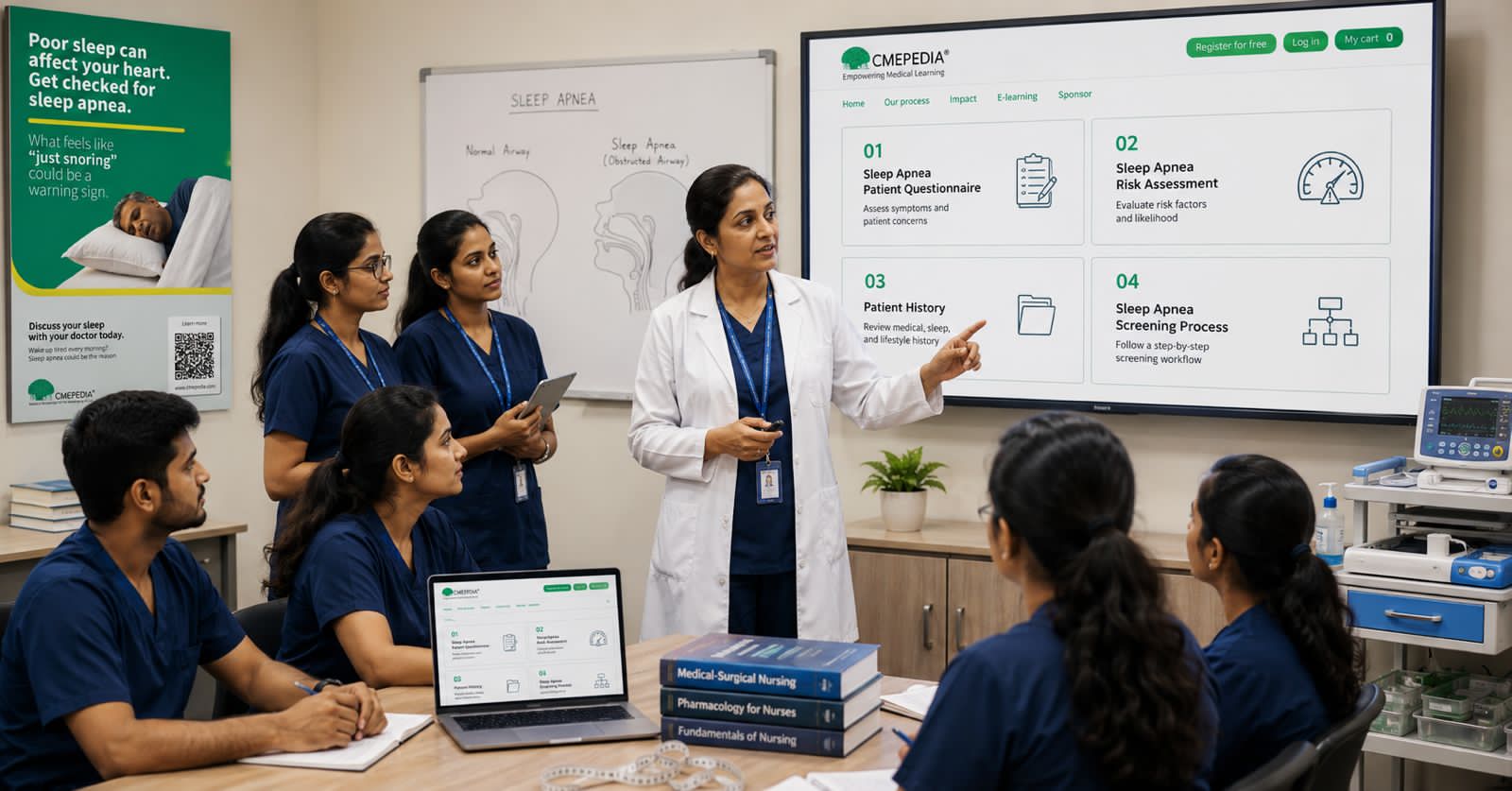
Nurses are the largest group of healthcare professionals worldwide, yet their numbers still do not keep pace with the demands placed on health systems. According to the World Health Organization’s State of the World’s Nursing 2025 report, the global nursing workforce grew from 27.9 million in 2018 to 29.8 million in 2023, encouraging progress, yet the world still faces a shortfall of 5.8 million nurses. That gap is projected to narrow to 4.1 million by 2030, but only if countries continue to invest deliberately in nursing education and workforce development.
For India, with over 3.3 million nurses registered with the Indian Nursing Council (INC), the challenge is not simply the shortage itself but what lies beneath it: an uneven distribution of nurses, gaps in continuing education, and a workforce that needs sustained professional development to keep pace with evolving clinical demands. Closing this gap is not just a staffing exercise. It is fundamentally an educational challenge.
Why nurses are essential to healthcare
Nurses are often the first and most consistent point of contact a patient has with the healthcare system. They monitor vital signs, administer treatment, coordinate care across specialities, educate patients and families, and frequently serve as the safety net that catches errors before they cause harm. Robust evidence, including research from the WHO and the International Council of Nurses (ICN), links adequate nurse staffing and well-trained nursing teams to better patient outcomes, lower complication rates, and stronger primary care systems.
When nursing capacity is strained, the effects ripple outward, from longer wait times and rushed consultations to higher rates of preventable complications. Strengthening the nursing workforce, therefore, is not a peripheral healthcare issue; it sits close to the centre of patient safety and health system performance.
Understanding the global nursing shortage
The State of the World’s Nursing 2025 report, published jointly by WHO and ICN, highlights several converging pressures on the nursing workforce:
- Uneven global distribution– roughly 78% of the world’s nurses are concentrated in countries that represent only 49% of the global population, leaving low- and middle-income regions significantly under-resourced.
- Regional concentration of shortages– Africa and the Eastern Mediterranean region are projected to account for nearly 70% of the global nursing shortfall by 2030.
- Workforce migration– many nurses, particularly from lower-income countries, move abroad in search of better pay, safer working conditions, and stronger career pathways, which can leave gaps in their home health systems.
- An ageing workforce and rising care demands– as populations age and chronic disease burdens grow, the demand for skilled nursing care is increasing faster than new nurses are entering some systems.
In India specifically, the picture is nuanced. The government has reported a nurse-to-population ratio of just over 2 per 1,000 people, according to figures shared in the Lok Sabha by the Ministry of Health and Family Welfare, still below the WHO-recommended benchmark of 3 nurses per 1,000 population. India also trains a substantial number of new nursing graduates each year, but faculty shortages, uneven quality across institutions, and concentration of nurses in urban centres mean that expanding numbers alone has not closed the gap, particularly in rural and semi-urban areas.
Why education is part of the solution
It is tempting to treat the nursing shortage purely as a numbers problem by training more nurses and expecting the gap to close. However, increasing enrolment alone does not guarantee a workforce that is clinically confident, up to date, and prepared to manage increasingly complex patient needs.
This is where Continuing Nursing Education (CNE) plays an important role. A nurse’s education does not end at graduation. Clinical guidelines evolve, new technologies become part of routine practice, and patient needs continue to change. Through structured, evidence-based continuing nursing education, nurses can:
- Apply current clinical protocols with confidence
- Recognise and respond to complications earlier
- Deliver safer, evidence-based patient care
- Stay current with emerging best practices and healthcare innovations
The WHO report also highlights that strengthening the nursing workforce requires more than increasing numbers. Investing in ongoing education, professional support, and workforce development helps ensure nurses have the knowledge and skills needed to provide high-quality patient care throughout their careers.
Supporting nurses throughout their careers
One of the most persistent barriers to continuing education for nurses is not motivation; it is access. Nurses working demanding clinical shifts, often in understaffed settings, have limited time and flexibility for traditional classroom-based learning.
Flexible, online continuing education addresses this directly. When high-quality courses are available on a nurse’s own schedule, learning becomes something that fits around clinical responsibilities rather than competing with them. This is particularly relevant in India, where nurses in Tier 2 and Tier 3 cities, as well as rural health facilities, often have the least access to structured in-person training opportunities, despite carrying significant clinical responsibility.
Accessible online education also supports lifelong learning as a professional norm rather than an occasional obligation, helping nurses build competence steadily over a career rather than in isolated bursts tied to licensing renewal.
How CMEPEDIA supports nursing education
CMEPEDIA supports nurses, doctors, dentists, and allied healthcare professionals through evidence-based, flexible continuing healthcare education that promotes lifelong learning and professional development. Recognising the demands of clinical practice, the platform offers structured online learning that helps healthcare professionals stay current with evolving evidence, strengthen their knowledge, and continue developing throughout their careers.
For nursing professionals looking to build specialised knowledge, meet continuing professional development requirements, or simply stay up to date with evolving clinical practice, CMEPEDIA provides learning grounded in verified evidence and tailored to real clinical needs.
Conclusion
The global nursing shortage cannot be addressed through recruitment alone. As the World Health Organization highlights, strengthening the nursing workforce also requires sustained investment in education, continuing professional development, leadership, and lifelong learning. For India, where workforce distribution and access to ongoing education remain important challenges, investing in nursing education is an investment in better patient care.
Every nurse who has access to current, high-quality continuing education is better equipped to deliver safe, confident, and evidence-based care. By supporting lifelong learning, healthcare organisations and education providers can help build a more resilient nursing workforce that is prepared to meet the evolving needs of patients and healthcare systems.
High-quality nursing education is not only an investment in healthcare professionals. It is an investment in safer, stronger, and more sustainable healthcare for everyone.


