Healthcare education: Building better solutions for lifelong learning
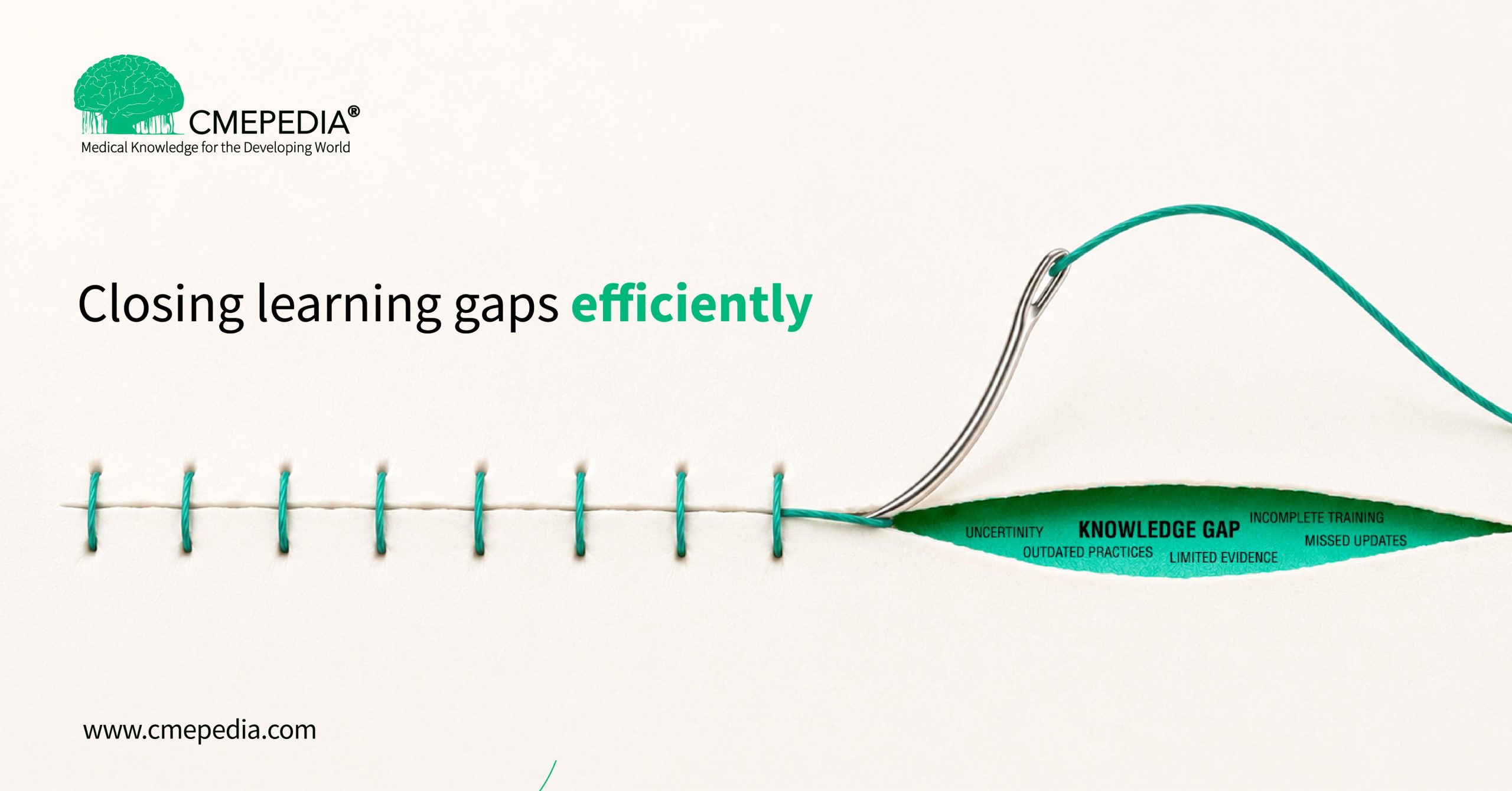
Every profession has its share of debate. Healthcare education is no exception. Ask any doctor, nurse, or allied healthcare professional about continuing education, and you’ll likely hear the same frustrations: rigid formats, uneven quality, credit systems that reward attendance over meaningful learning, and educational content that doesn’t always reflect real clinical practice.
These conversations matter. But at some point, discussion has to turn into action.
That belief lies at the heart of CMEPEDIA. By making evidence-based healthcare education more accessible, relevant, and aligned with internationally recognised standards, CMEPEDIA aims to support lifelong learning for healthcare professionals across India.
The problem isn’t a mystery
Healthcare education in India has grown rapidly, but growth alone does not guarantee quality. Continuing Medical Education (CME) has been part of professional development for decades. Today, under the National Medical Commission’s Registered Medical Practitioner (Professional Conduct) Regulations, 2023, doctors are required to complete a minimum of 30 Continuing Professional Development (CPD) credit hours every five years to renew their registration.
This is an important step towards strengthening lifelong learning. However, regulation alone cannot address every challenge. Implementation still varies across states; the quality of educational programmes differs considerably, and many healthcare professionals, particularly those in smaller towns and rural areas, continue to face barriers in accessing consistent, relevant, and high-quality education.
The challenge extends beyond India. The World Health Organization (WHO) projects a global shortfall of approximately 11 million health workers by 2030, with the greatest shortages expected in low- and middle-income countries. Addressing this gap is not only about training more healthcare professionals. It is equally about ensuring that those already in practice have continuous access to high-quality education that keeps pace with advances in medicine and patient care.
Complaining doesn’t close that gap
It would be easy to write another article listing everything that is wrong with healthcare education. Fragmented accreditation systems. Inconsistent educational quality. Limited access for healthcare professionals in rural areas. Programmes that focus on compliance rather than meaningful learning.
None of these challenges is new. Healthcare professionals experience them every day.
The real question is not what is broken. It is what can be done to improve it. Real progress comes from building practical, evidence-based solutions that make lifelong learning more accessible, relevant, and effective.
Why CMEPEDIA and ACCRECENT exist
CMEPEDIA was created with a clear purpose: to support healthcare professionals with accessible, high-quality, evidence-based continuing education.
That purpose is reflected in four key priorities:
- Access – Many qualified healthcare professionals, particularly outside major metropolitan areas, have limited access to high-quality, relevant CME and CPD opportunities.
- Consistency – The quality of educational programmes can vary significantly depending on where and how they are delivered.
- Relevance – Healthcare professionals need learning that reflects current evidence and internationally recognised standards, rather than simply meeting credit requirements.
- Lifelong learning – Education should not stop at graduation or professional registration. It should remain a continuous and evolving part of clinical practice.
Rather than simply discussing these challenges, CMEPEDIA aims to make evidence-based healthcare education more accessible, practical, and aligned with recognised continuing professional development standards, supporting healthcare professionals throughout their careers.
Building is a philosophy, not just a strategy
This mindset extends beyond any single educational platform. It reflects a broader approach to improving healthcare education through practical, evidence-based solutions.
- When access is limited, expand it rather than simply pointing out the gap.
- When quality is inconsistent, raise the standard through evidence-based education rather than simply criticising existing programmes.
- When learning methods become outdated, innovate and improve them rather than waiting for someone else to lead the change.
Healthcare never stands still. New research, updated clinical guidelines, and emerging technologies continue to reshape clinical practice. To deliver safe, high-quality patient care, doctors, nurses, dentists, and allied healthcare professionals need learning opportunities that evolve just as quickly, supporting continuous professional development throughout their careers rather than only at occasional conferences or training events.
What this means for healthcare professionals and institutions
For healthcare professionals, this philosophy means access to education that respects both their time and their expertise. Learning should be evidence-based, aligned with recognised professional development frameworks, and accessible regardless of where they practise.
For medical colleges, hospitals, and universities, it means supporting a culture of lifelong learning through high-quality educational content that strengthens clinical practice, professional development, and patient care.
The goal has never been to be the loudest voice highlighting the challenges in healthcare education. It has been to contribute practical, evidence-based solutions that make lifelong learning more accessible, relevant, and meaningful.
Don’t argue about what is broken. Build something better.
That philosophy continues to guide CMEPEDIA. Healthcare education does not improve through discussion alone. It improves through continuous innovation, high-quality educational content, collaboration, and a commitment to lifelong learning.
No single platform can solve every challenge facing healthcare education. However, meaningful progress begins when organisations choose to build practical solutions that help healthcare professionals learn, grow, and deliver better patient care.
If you are looking for accessible, evidence-based continuing healthcare education, explore the learning opportunities available through CMEPEDIA and discover how lifelong learning can support your professional journey.


