Continuing medical education: A smarter way to stay ahead
The day a healthcare professional completes their qualifying degree is not the end of their education. In many ways, it is the beginning.
Medicine is one of the fastest-evolving fields in human history. Clinical guidelines change. New drugs receive approval. Surgical techniques are refined. Diseases that were once poorly understood are now preventable. And conditions we believed we had mastered sometimes require a completely different approach.
For doctors, nurses, and dentists across India, keeping pace with this change is no longer optional. It is a professional obligation, and increasingly, a legal one.
What is Continuing Medical Education
Continuing Medical Education, commonly referred to as CME, refers to structured educational activities that healthcare professionals undertake after their formal training to maintain and improve their clinical knowledge, skills, and professional practice.
CME can take many forms:
- Online courses and modules
- Workshops and hands-on skill sessions
- Medical conferences and symposia
- Peer-reviewed self-learning programmes
- Case-based learning activities
The core purpose of CME, as defined by the World Health Organisation, is clear: healthcare professional education is integral to the delivery of safe, high-quality, and equitable patient care. It is not a supplementary activity; it is part of being a responsible clinician.
The Speed of Medical Knowledge Is Accelerating
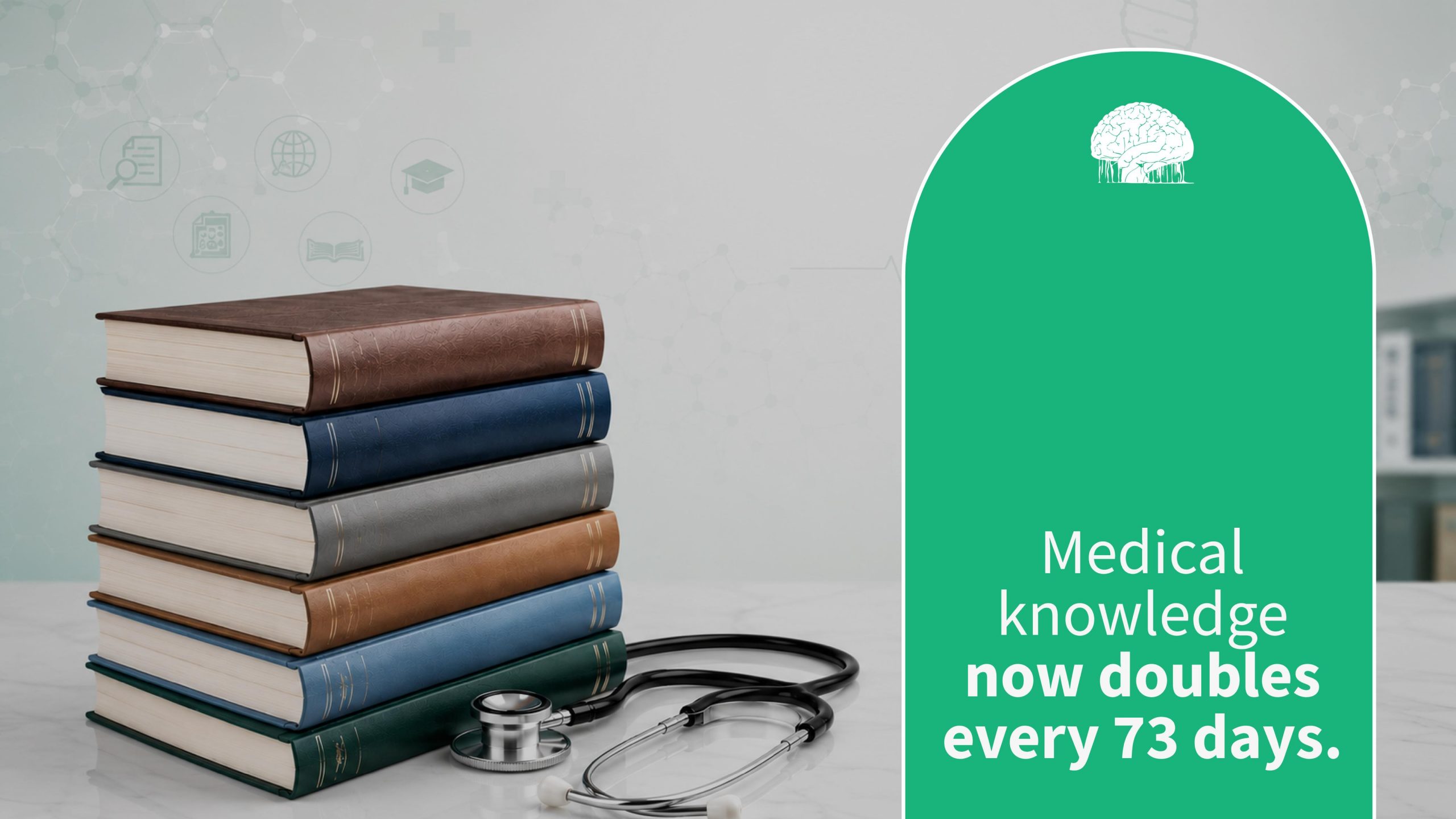
In 1950, the total body of medical knowledge doubled approximately every 50 years. By 2010, that doubling time had reduced to around 3.5 years. According to projections by physician and educator Peter Densen, published in the Transactions of the American Clinical and Climatological Association, the doubling time of medical knowledge had fallen to an estimated 73 days by 2020.
In simple terms, medicine is advancing faster than any single clinician can keep up with through training alone.
This is not a criticism of any individual practitioner. It is simply the reality of a field where genomics, pharmacology, diagnostics, and clinical research are advancing simultaneously.
The healthcare professional who qualified several years ago, without ongoing education, is working from a knowledge base that has been substantially reshaped.
CME exists to bridge this gap, consistently and verifiably.
What Does the Law Say? CME Requirements in India
In India, continuing medical education has moved firmly from a voluntary commitment to a regulatory one.
Under the National Medical Commission (NMC) Registered Medical Practitioner (Professional Conduct) Regulations, 2023, which came into force on 2nd August 2023, all registered medical practitioners below the age of 65 are required to complete a minimum of 30 Continuing Professional Development (CPD) credit hours every five years for the purpose of renewing their licence to practise.
Failure to comply can result in:
- Denial of licence renewal
- Suspension of the licence to practise for up to 30 days
- Being placed on inactive practitioner status
The NMC has been explicit in its intent: practitioners should not view CPD and recertification as a threat, but as a professional responsibility.
Individual state medical councils carry their own requirements in addition to the NMC framework:
- The Karnataka Medical Council requires 30 CME credits over a five-year re-registration period, with specific conditions on how credits are calculated.
- The Maharashtra Medical Council accepts online CME programmes, with credits counting towards renewal.
- The Delhi Medical Council recognises internationally accredited online programmes.
Seventeen state medical councils across India currently accept online CME modules for credit, a recognition that formal, quality learning can happen beyond a conference hall.
Why CME Matters Beyond Compliance
Meeting a regulatory requirement is one reason to pursue CME. But it is far from the most important one.
Better Patient Outcomes Begin with Better-Informed Clinicians
Research consistently shows that healthcare professionals who engage in structured continuing education deliver measurably better care. A 2025 analysis published in The Journal of Continuing Education in the Health Professions found that accredited CME directly contributes to improved patient health outcomes, including higher vaccination and screening rates, improved chronic disease management, and reduced relapse rates in patients with complex conditions.
In India, where disease burdens include the highest rates of tuberculosis globally, over 101 million people living with diabetes, and more than 220 million adults with hypertension, the stakes of clinical knowledge gaps are not abstract. They are visible in outcomes.
Clinical Guidelines Change, and Silence Can Be Harmful
Consider a practitioner managing Type 2 diabetes using treatment algorithms from five years ago. Guidelines from the Research Society for the Study of Diabetes in India (RSSDI) and international bodies have evolved significantly, particularly around GLP-1 receptor agonists, SGLT2 inhibitors, and individualised glycaemic targets. A clinician unaware of these updates may be offering their patient a standard of care that is no longer considered optimal.
The same applies to antibiotic prescribing (where antimicrobial resistance has fundamentally changed empiric treatment choices), hypertension management, post-COVID clinical guidance, and nursing protocols in infection control.
CME keeps the clinical compass calibrated.
Professional Confidence and Career Development
Beyond patient care, continuing education supports the growth and confidence of healthcare professionals themselves. Nurses pursuing CNE (Continuing Nursing Education), dentists engaged in CDE (Continuing Dental Education), and physicians pursuing specialist CME report that structured learning improves not only their clinical practice but also their professional satisfaction and sense of competence.
Lifelong learning for healthcare professionals is not only a duty to patients, but it is also an investment in one’s own professional identity.
The Challenges: Access to Quality CME
India trains one of the largest healthcare workforces in the world. Yet access to high-quality, peer-reviewed, clinically relevant CME remains uneven.
Several challenges persist:
- Geographical barriers: A specialist in a tier-2 city or rural district may have limited access to major conferences held in metropolitan centres.
- Time constraints: Attending a full-day CME event requires practitioners to close their clinics or leave their wards, a significant practical barrier.
- Commercial influence: Historically, a significant portion of CME in India has been sponsored by pharmaceutical companies, raising questions about the independence of educational content. The NMC’s CPD guidelines now explicitly require disclosure of conflicts of interest to address this.
- Inconsistent quality: Without a standardised national accreditation framework, the clinical rigour and relevance of available CME have varied considerably.
Online medical education, when peer-reviewed and independently accredited, addresses each of these barriers directly.
The Role of Accreditation in CME Quality
Not all CME is created equal. A lecture supported by a single manufacturer and a peer-reviewed, evidence-based online module developed under independent accreditation represent very different educational experiences, even if both award the same number of credit hours.
The European Board for Accreditation of Continuing Education for Health Professionals (EBAC) is one of the most rigorous international accreditation frameworks for healthcare education. EBAC accreditation requires:
- A formal educational needs assessment before course development
- Full conflict-of-interest disclosure from all authors, reviewers, and editors
- Independent peer review of all content
- Alignment with current clinical evidence and guidelines
- Regular content review and updating
For Indian healthcare professionals, seeking CME from sources that meet internationally recognised accreditation standards, rather than relying on commercially supported content, is the strongest guarantee that the education received is genuinely independent and clinically trustworthy.
What Good CME Looks Like in Practice
A well-designed CME module, whether online or in person, should:
- State clear, measurable learning objectives at the outset
- Be developed by qualified authors with disclosed affiliations and funding sources
- Be independently peer-reviewed by experts in the relevant clinical field
- Reference current evidence from sources such as the BMJ, The Lancet, NEJM, and Indian clinical guidelines
- Include a self-assessment component to confirm learning
- Provide a verifiable certificate of completion for relicensing records
When evaluating a CME offering from any provider, these are the questions worth asking. The answers tell you whether the education will genuinely update your practice or simply satisfy a compliance requirement.
Conclusion: Learning as a Clinical Responsibility
The most accomplished healthcare professionals share one defining quality: a lifelong commitment to learning. Formal education lays the foundation, but staying current with evolving medical knowledge is what enables clinicians to continue delivering safe, effective, and evidence-based care throughout their careers.
Medicine never stands still. Clinical guidelines are updated, new research reshapes best practices, and innovative treatments continue to improve patient outcomes. Continuing Medical Education helps healthcare professionals stay informed, strengthen their clinical decision-making, and meet the changing needs of the patients they serve.
As the demand for accessible, high-quality education grows, platforms such as CMEPEDIA make it easier for doctors, nurses, dentists, and other healthcare professionals to access accredited, evidence-based learning whenever and wherever they need it.
Ultimately, Continuing Medical Education is more than a regulatory requirement. It is an ongoing commitment to professional excellence and better patient care. Because patients deserve healthcare professionals who never stop learning.
More references:
Credit hours and continuing medical education (CME) programmes
Editorial: Continuing Professional Development
Health Workforce Education and Training
Regional Guidelines for CME/CPD Activities — South-East Asia


