Digital health in India: How mobile technology is transforming healthcare
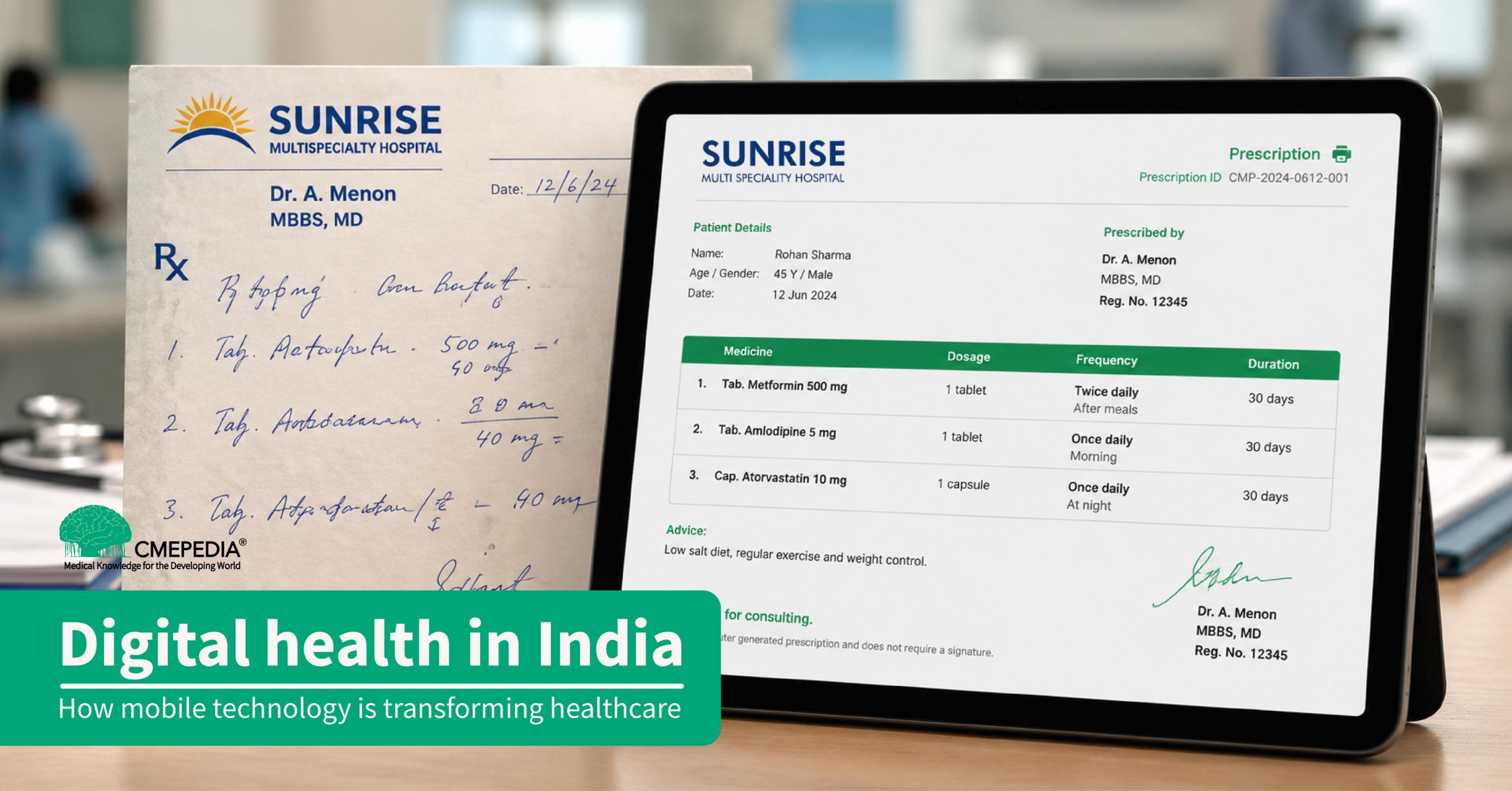
Digital health in India is changing how patients access care and how healthcare professionals deliver it. Mobile devices are no longer just communication tools; they have become essential for consultations, patient monitoring, clinical decision-making, and continuing healthcare education. Recent initiatives by healthcare leaders, including Dr. Devi Prasad Shetty’s vision for digitally integrated, paperless hospitals, reflect how mobile and digital technologies are becoming central to modern healthcare delivery.
With mobile access to lab results and patient records, healthcare professionals can review information and document care wherever they are working. This shift reflects a broader transformation across India’s healthcare system, one that extends well beyond video consultations into how care is delivered, monitored, documented, and continuously learned.
The rise of digital health in India
India’s digital health journey has been shaped by scale. With a large population, an uneven distribution of specialists, and significant rural-urban gaps in access, digital tools have become a practical necessity rather than a convenience. While the COVID-19 pandemic accelerated the adoption of remote consultations and digital documentation, the transformation has continued through initiatives such as the Ayushman Bharat Digital Mission (ABDM), which aims to create an integrated, interoperable digital health ecosystem.
Together with sustained government investment and growing clinical adoption, these efforts are driving the use of mobile-first healthcare, electronic health records, and connected digital services across India.
What is mobile health (mHealth)?
Mobile health, or mHealth, refers to the use of smartphones, tablets, and connected devices to support healthcare delivery, communication, and monitoring. It sits within the broader field of digital health, which also includes electronic health records, telemedicine platforms, and health information exchanges. Mobile health is part of digital health in India. It includes apps for appointments and prescriptions, secure messaging between care teams, monitoring through wearables, and access to lab results and health records on mobile devices.
How mobile technology is transforming patient care
Digital health in India includes services such as eSanjeevani and tools that help healthcare teams monitor patients between visits, share prescriptions, and review test results.
- Remote patient monitoring — Connected devices allow clinicians to track vitals such as blood pressure, glucose levels, or oxygen saturation between visits, supporting earlier intervention for chronic conditions.
- Digital prescriptions — E-prescribing reduces transcription errors and makes medication history easier to track across providers.
- Patient engagement apps — Reminders for medication adherence, appointment scheduling, and follow-up care improve continuity, particularly for patients managing long-term conditions like diabetes or hypertension.
- Faster clinical decision-making — Mobile access to lab results, imaging, and patient history lets clinicians make informed decisions without waiting to return to a desktop system.
Digital health in India beyond telemedicine
Telemedicine tends to dominate conversations about digital health, but it is only one part of a larger ecosystem. Electronic Health Records (EHRs) create a longitudinal patient history that travels across providers. Digital diagnostics, including AI-assisted image analysis and point-of-care testing, help extend specialist-level screening into areas with fewer specialists. Wearables enable continuous, passive monitoring rather than periodic check-ins. And healthcare communication technologies, from secure messaging to care-coordination platforms, are changing how multidisciplinary teams collaborate. Together, these tools are reshaping the daily texture of clinical practice, not just the moment of consultation.
Government initiatives driving digital health in India
India’s public digital health infrastructure has expanded substantially in recent years, largely under the Ayushman Bharat Digital Mission (ABDM), the national programme (built on the earlier National Digital Health Mission framework) designed to create an interoperable digital health ecosystem. Recent government data shows that the Ayushman Bharat Digital Mission (ABDM) has created hundreds of millions of ABHA IDs and digital health records, demonstrating the rapid adoption of India’s digital health ecosystem. ABHA gives individuals a unique, consent-based digital health identity that allows records to be securely shared across providers, reducing paperwork and supporting continuity of care.
Complementing this is eSanjeevani, the government’s national telemedicine platform, which has facilitated over 43 crore teleconsultations across states and union territories, with its provider-assisted model extending specialist access into rural Health and Wellness Centres. Together, these initiatives represent one of the largest digital health infrastructures in the world, and their continued expansion has direct implications for how care is delivered and documented at the point of care.
Why healthcare professionals must adapt
As digital infrastructure becomes embedded in routine care, digital literacy is becoming as relevant to clinical competence as procedural or diagnostic skill. Professionals who can navigate EHR systems, interpret remote monitoring data, and communicate through digital channels are better positioned to coordinate care and respond quickly to patient needs. This does not replace clinical judgment; it extends it. For institutions, digital fluency is increasingly a baseline expectation, not a specialised skill reserved for a few.
The future of continuing healthcare education
Digital transformation in care delivery is mirrored by a parallel shift in how healthcare professionals learn. Online CME, CDE, and CNE programmes have made professional education more flexible, allowing practitioners to fit structured learning around demanding clinical schedules rather than the reverse. Mobile learning and microlearning, short, focused modules rather than long lecture formats, fit naturally into the fragmented pockets of time clinicians actually have available. Self-paced, evidence-based learning also means education can be revisited when a professional needs it most, such as before an unfamiliar case, rather than only during a scheduled session.
As healthcare technologies and protocols continue to evolve, lifelong learning is no longer optional. Continuous professional development ensures that as tools like AI-assisted diagnostics and remote monitoring become more common, the professionals using them remain grounded in evidence and current best practice.
How CMEPEDIA supports evidence-based learning
This shift toward flexible, evidence-based education is central to how CMEPEDIA approaches continuing healthcare learning. The platform is built around accessible, evidence-based content that fits around a clinical schedule rather than competing with it, allowing doctors, nurses, dentists, and allied health professionals to engage with structured learning at a pace and time that works for them. By focusing on practical, professionally relevant knowledge, CMEPEDIA supports the kind of ongoing learning that keeps pace with an evolving healthcare landscape, without asking professionals to step away from patient care to do so.
By making high-quality, evidence-based healthcare education more accessible, CMEPEDIA supports healthcare professionals in staying current with evolving technologies, strengthening clinical decision-making, and delivering safe, effective patient care
Conclusion
Mobile technology has moved from the periphery of healthcare to its centre, shaping how patients are monitored, how records are shared, and how professionals themselves stay current. The infrastructure behind this shift, from ABHA to eSanjeevani, is now firmly established in India’s healthcare system. What matters next is how well healthcare professionals are equipped to work within it, clinically and educationally. Continuing, evidence-based education is what makes that possible, ensuring that as tools change, the standard of care they support does not waver.


